
Supreme Court of the United Kingdom
Final court of appeal for the United Kingdom, established in 2009.

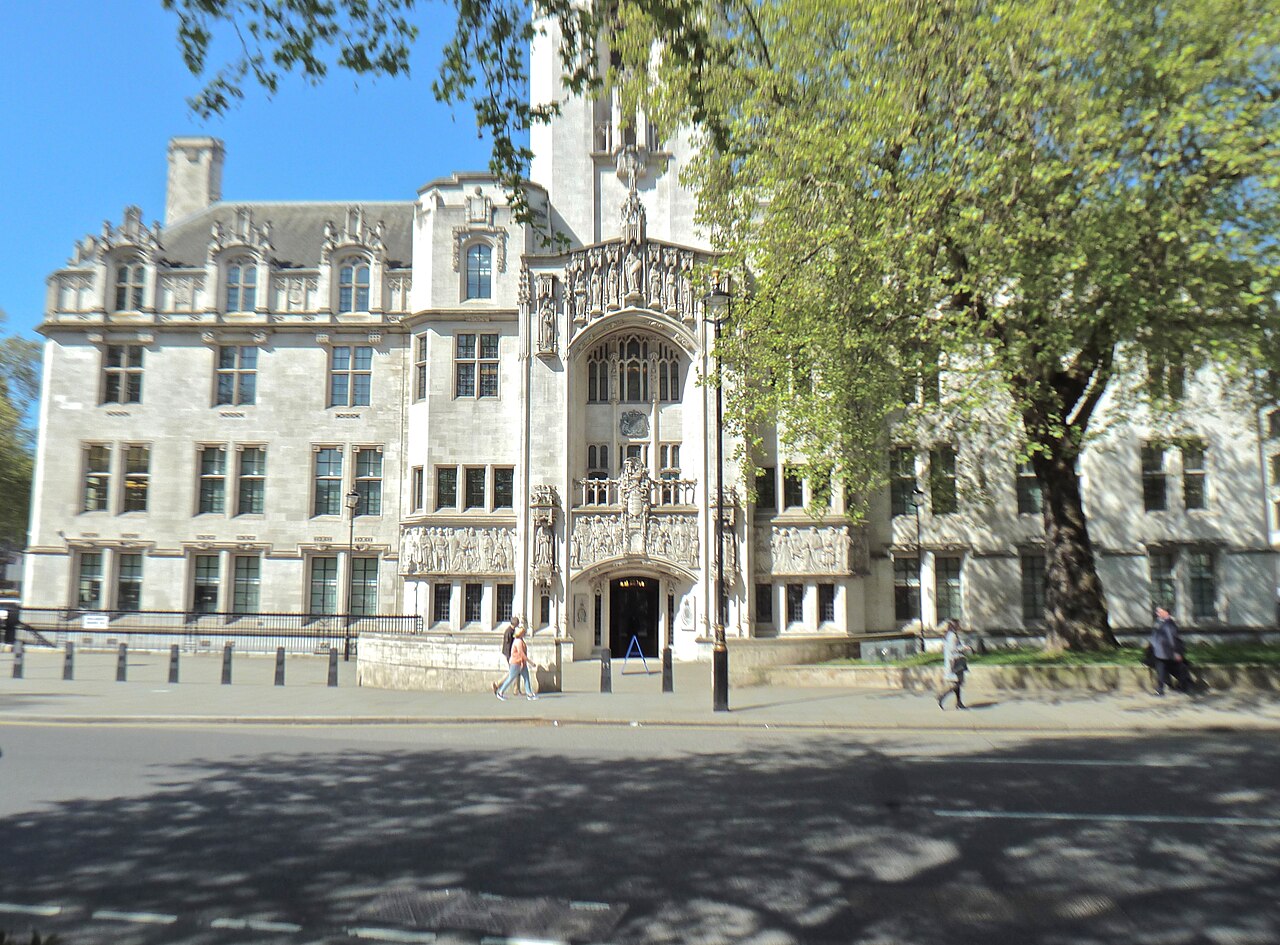
Anthony O'Neil · CC BY-SA 2.0
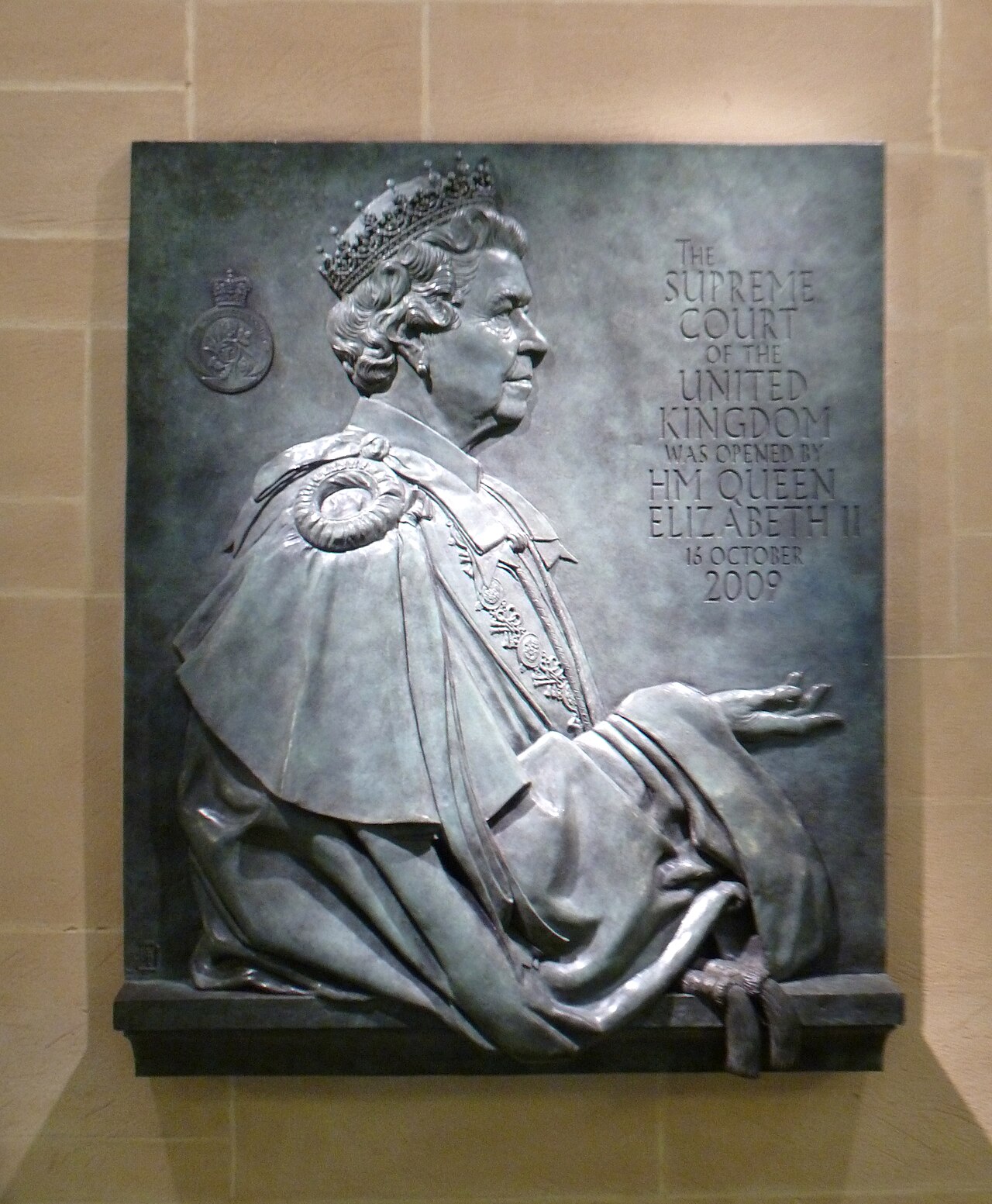
The Supreme Court of the United Kingdom (UKSC) serves as the highest court of appeal for all civil cases across the UK, and for all criminal cases from England, Wales, and Northern Ireland. It also handles a small number of criminal appeals from Scotland. Created on 1 October 2009 under the Constitutional Reform Act 2005, the Court deals with matters of major public or constitutional significance that affect the entire country. Additionally, it hears devolution cases from Scotland, Wales, and Northern Ireland. Because of this, its bench must include judges from all three of the UK’s legal systems—England and Wales, Scotland, and Northern Ireland—with a total of twelve judges drawn from these regions.
The Court typically convenes at the Middlesex Guildhall in Westminster, but it can sit elsewhere, having previously held sessions in Edinburgh City Chambers, the Royal Courts of Justice in Belfast, the Tŷ Hywel Building in Cardiff, and the Manchester Civil Justice Centre.
Due to the UK’s doctrine of parliamentary sovereignty and lack of a codified constitution, the Supreme Court has far narrower powers of judicial review than the constitutional or supreme courts of countries like India, the United States, Canada, or Australia. It cannot strike down primary legislation passed by Parliament. However, like other UK courts, it can overturn secondary legislation if that legislation is found to be *ultra vires*—beyond the powers granted by the primary legislation that authorized it. Additionally, the Court can disapply incompatible EU law (where applicable) and issue declarations of incompatibility under the Human Rights Act 1998, though these do not invalidate the law.
Under section 4 of the Human Rights Act 1998, the Supreme Court (along with certain other UK courts) can issue a declaration of incompatibility, stating that a piece of legislation—whether primary or secondary—conflicts with a right under the European Convention on Human Rights. This declaration does not nullify the law, and neither Parliament nor the government is required to act on it. If they choose to accept it, ministers may use powers under section 10 of the Human Rights Act to amend the legislation via statutory instrument, or ask Parliament to make the change.
The Supreme Court is a non-ministerial government department. Section 23 of the Constitutional Reform Act sets the number of judges
- established
- 1 October 2009
- field
- Judicial body (final court of appeal)
- nationality
- United Kingdom
- known_for
- Highest appellate court for UK civil and most criminal cases; limited judicial review powers due to parliamentary sovereignty, but can issue declarations of incompatibility and disapply EU law
- number_of_judges
- 12 (can be increased by resolution of both Houses of Parliament)
- usual_panel_size
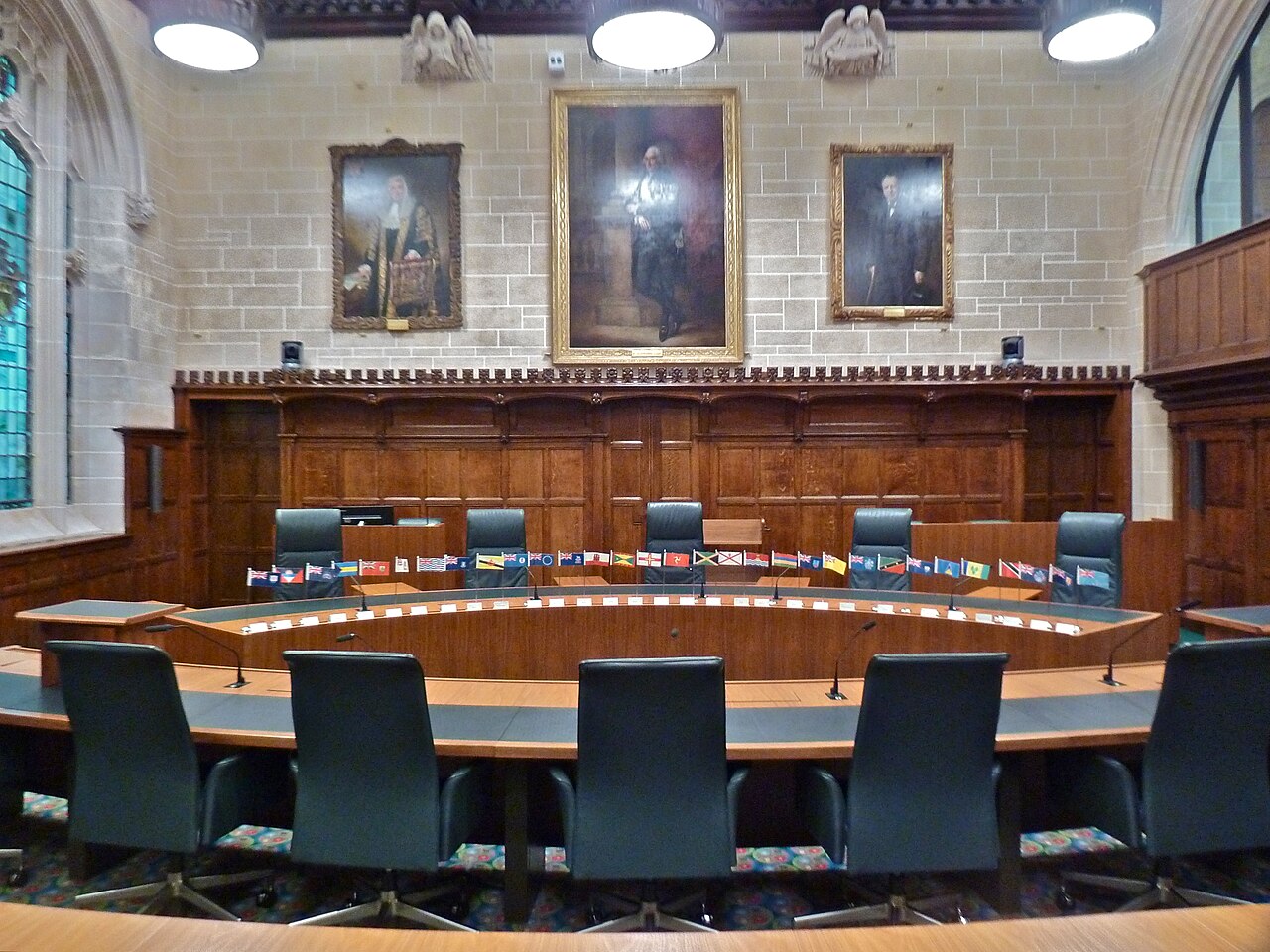
- 5 justices; 7 or more for particularly important cases, with occasional panels of 11
Lore & Background
The Supreme Court assumed the judicial functions of the House of Lords, which had been exercised by the Lords of Appeal in Ordinary (Law Lords). Its jurisdiction over devolution matters had previously been exercised by the Judicial Committee of the Privy Council. The creation of a Supreme Court was first proposed in a July 2003 consultation paper by the Department of Constitutional Affairs, arguing for explicit separation of judicial functions from the legislature. The first President of the Court, The Lord Phillips of Worth Matravers, claimed the old system confused people and that the Supreme Court would for the first time provide a clear separation of powers. The first case heard by the Court was R v Horncastle in 2009, a landmark criminal appeal concerning hearsay evidence. Notable later cases include R (Miller) v Secretary of State for Exiting the European Union (2017) and R (Miller) v The Prime Minister / Cherry v Advocate General for Scotland (2019), the latter being one of several cases heard by a panel of 11 justices.
Reader's Guide
The Supreme Court of the United Kingdom represents a significant constitutional reform, formally separating the highest judicial functions from the House of Lords. However, its powers are limited by the UK's doctrine of parliamentary sovereignty and lack of an entrenched codified constitution. Unlike supreme courts in countries such as India, the United States, Canada, and Australia, the UK Supreme Court cannot overturn primary legislation made by Parliament. It can overturn secondary legislation if found ultra vires, and under section 4 of the Human Rights Act 1998, it may issue a declaration of incompatibility with European Convention on Human Rights rights, though such declarations do not overturn legislation. The Court's first case, HM Treasury v Ahmed, concerned the separation of powers and the extent of delegated legislative authority. A landmark case, R (Miller) v The Prime Minister and Cherry v Advocate General for Scotland (Miller/Cherry), involved 11 judges ruling on the unlawful prorogation of Parliament by Boris Johnson. In 2022, the Court ruled that the Scottish Parliament could not legislate for a second independence referendum without Westminster's permission, as such matters are reserved under the Scotland Act 1998. The Court usually sits in the Middlesex Guildhall in Westminster but has also sat in Edinburgh, Belfast, Cardiff, and Manchester.
Did You Know?
- The Supreme Court assumed the judicial functions of the House of Lords, previously exercised by the Lords of Appeal in Ordinary (Law Lords).
- The Court cannot overturn any primary legislation made by Parliament due to the doctrine of parliamentary sovereignty.
- The first case heard by the Supreme Court was HM Treasury v Ahmed, concerning the separation of powers.
- The Miller/Cherry case on Boris Johnson's prorogation of Parliament was one of only two cases involving 11 judges.
Presidential and Cabinet Leadership
Harvard Law School has produced a striking pipeline into the highest levels of American executive power. Two alumni reached the presidency: Rutherford B. Hayes, the nineteenth president, and Barack Obama, the forty-fourth. Beyond the White House, graduates have occupied nearly every major cabinet seat, including the secretariats of state, defense, treasury, labor, transportation, energy, the interior, education, commerce, and Homeland Security, as well as the Navy and war departments. Dean Acheson looms large among them, credited with shaping Lend-Lease, the Marshall Plan, NATO, the International Monetary Fund, the World Bank, and the institutional precursors of the European Union and the World Trade Organization, while also influencing the decision to enter the Korean War. In more recent decades, Mike Pompeo served as both CIA director and secretary of state, Samantha Power represented the United States at the United Nations, and Robert Zoellick held the deputy secretary of state post, the trade representative role, and the World Bank presidency. Together, these careers illustrate how one law school's alumni have threaded through the entire executive branch across well over a century.
The Attorney General Lineage
No single cabinet position has been more thoroughly populated by Harvard Law graduates than the office of the United States attorney general. The roster stretches from Francis Biddle and Ebenezer R. Hoar through the twentieth and twenty-first centuries to Merrick Garland, who also served as chief judge of the United States Court of Appeals for the District of Columbia Circuit. Charles Joseph Bonaparte is a particularly notable entry, having simultaneously held the attorney generalship and the secretaryship of the Navy while also founding the precursor organization to the Federal Bureau of Investigation. William M. Evarts and Richard Olney each combined the attorney general role with the secretaryship of state, and Evarts additionally served as a senator from New York. Other names on the list include Alberto Gonzales, Loretta Lynch, Janet Reno, Elliot Richardson, William French Smith, and Richard Kleindienst. The sheer number of graduates who have held this single office underscores the institution's deep and sustained connection to the nation's chief legal officer role, spanning multiple political parties and eras of American governance.
A Congressional Constellation
The legislative branch has drawn heavily from Harvard Law's alumni pool, producing senators and representatives from a wide geographic spread. Senators on the list hail from states including Massachusetts, Rhode Island, New York, Texas, Virginia, Michigan, Washington, Maine, Missouri, Wisconsin, Hawaii, Florida, Vermont, South Dakota, Utah, Delaware, Maryland, Alaska, Illinois, Ohio, Arkansas, Idaho, and New Hampshire. Many of these figures held dual roles, serving first as representatives before ascending to the Senate, as seen with Chuck Schumer, Ted Cruz, and Ted Stevens. Several also served as governors of their home states, including John Chafee of Rhode Island, Bob Graham of Florida, and Mark Warner of Virginia. Thomas Eagleton of Missouri added the distinction of being the Democratic vice presidential nominee in 1972, while Tim Kaine of Virginia earned the same nomination in 2016. On the House side, alumni have represented districts in Rhode Island, Maine, Illinois, Georgia, Maryland, California, Texas, and Massachusetts. The geographic and temporal range of this congressional cohort reflects the institution's broad national appeal across generations.
Institutional Architecture and Policy Legacy
Beyond individual offices, Harvard Law alumni have left their fingerprints on the very architecture of modern governance. Dean Acheson's influence extended to the creation of Lend-Lease, the Marshall Plan, NATO, the International Monetary Fund, the World Bank, and the institutional precursors of both the European Union and the World Trade Organization, while also shaping the decision to enter the Korean War. Charles Joseph Bonaparte, while serving as attorney general and Navy secretary, founded the precursor to the Federal Bureau of Investigation, establishing a law-enforcement institution that persists to this day. William Ruckelshaus led the Environmental Protection Agency during two separate stints, first from 1970 to 1973 and again from 1983 to 1985. James Freis served as director of the Financial Crimes Enforcement Network, a role reflecting the growing complexity of financial regulation. Ron Klain held the White House chief of staff position from 2021 onward and previously served in that capacity for Vice President Joe Biden from 2008 to 2011. These examples show that the alumni's impact extends well beyond holding a title, reaching into the structural foundations of domestic and international policy.
Gallery


Frequently Asked Questions
Who is the Supreme Court of the United Kingdom?
The UKSC is the final appellate court for civil matters across the entire UK and for criminal appeals from England, Wales, and Northern Ireland, with a limited number of criminal appeals from Scotland. It was established on 1 October 2009 under the Constitutional Reform Act 2005, succeeding the Appellate Committee of the House of Lords.
What are the Supreme Court of the United Kingdom's powers and role?
The Court adjudicates cases of major public or constitutional significance, hears devolution disputes from Scotland, Wales, and Northern Ireland, and can issue declarations of incompatibility under the Human Rights Act or disapply EU law. Its judicial review powers, however, remain bounded by parliamentary sovereignty, so it cannot invalidate primary legislation.
How does the Supreme Court of the United Kingdom's story end?
As a standing judicial institution rather than a narrative character, the UKSC has no definitive 'ending'; it continues to operate as the apex court in the UK's legal system. Its ongoing function is to ensure coherent legal interpretation across the three distinct legal traditions within the United Kingdom.
Why is the Supreme Court of the United Kingdom important?
It sits at the top of the UK's judicial hierarchy, resolving disputes that affect the whole nation and preserving the constitutional balance between Westminster and the devolved administrations. Its rulings shape domestic legal standards that, in turn, influence how the UK fulfils its international treaty obligations and diplomatic commitments.
How is the Supreme Court of the United Kingdom composed?
The bench comprises 12 justices, a number that can be increased by resolution of both Houses of Parliament. Panels typically consist of five judges, expand to seven or more for particularly important cases, and occasionally reach eleven, with the requirement that all three UK legal systems—England and Wales, Scotland, and Northern Ireland—be represented.
More in International Law & Diplomacy 1-24
Spotted an error? Know more?
This is a living reference — every entry is fact-audited, and reader corrections feed straight into our audit queue. Suggest an edit · See this site's audit record