
Supreme Court of India
Highest appellate court and constitutional guardian of India.

MildGovernor · CC BY-SA 4.0
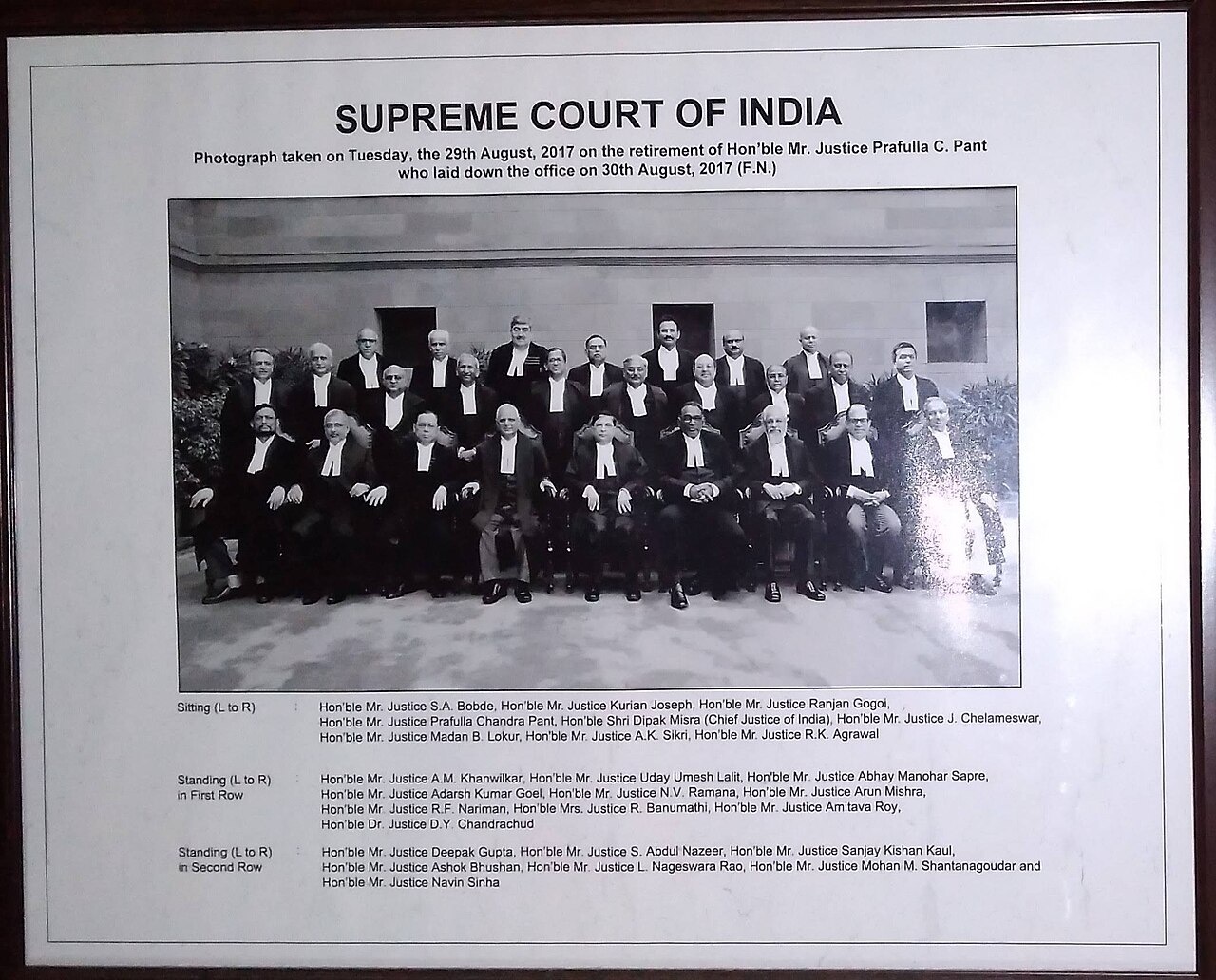
The Supreme Court of India stands as the nation’s highest judicial body and final court of appeal for all civil and criminal matters. It came into being on 26 January 1950, the day India declared itself a republic, taking over from the Judicial Committee of the Privy Council as the country’s top appellate court. The Chief Justice of India heads the court, which currently has a sanctioned strength of 34 judges (including the Chief Justice), meaning up to 33 additional judges. Since 1958, its proceedings have been held in the Supreme Court building in New Delhi. Because it can launch its own actions, hear appeals from every lower court, and even strike down constitutional amendments, it is often considered one of the most powerful supreme courts anywhere.
The court was created under the Constitution of India and exercises original, appellate, and advisory jurisdiction. As the highest constitutional court, it mainly hears appeals against decisions from state High Courts and various tribunals. When the president of India refers a matter, the court offers advisory opinions. It also wields the power of judicial review, allowing it to invalidate ordinary laws and constitutional amendments—a power rooted in the “basic structure” doctrine it developed during the 1960s and 1970s.
The Constitution tasks the Supreme Court with protecting citizens’ fundamental rights and resolving legal disputes between the central government and state governments. Its rulings are binding on all other Indian courts, as well as on the union and state governments. Under Article 142, the court holds inherent authority to issue any order it deems necessary to deliver complete justice, and such orders are binding on the president for enforcement.
**History** In 1861, the British Parliament passed the Indian High Courts Act and the Indian Councils Act, which abolished the earlier Supreme Courts in Calcutta, Madras, and Bombay, along with the Sadr Diwani Adalats. This allowed the English crown to set up High Courts in India. On 26 June 1862, letters patent established three charter High Courts in those same cities. These High Courts served as the highest judicial authority in their regions until the Federal Court of India was created under the Government of India Act 1935. The Federal Court could hear appeals from High Court judgments and settle disputes between provinces of the British Ra
- established
- 26 January 1950
- maximum_judges
- 33 (excluding chief justice)
Lore & Background
The Supreme Court of India came into existence on 26 January 1950 after the adoption of the Constitution of India. Its first proceedings and inauguration took place at 9:45 am on 28 January 1950, when the judges took their seats. Initially, the court had its seat at the Chamber of Princes in the Parliament House, where the Federal Court had sat from 1937 to 1950. In 1958, the Supreme Court moved to its present premises. Originally, the Constitution envisaged a Supreme Court with a chief justice and seven judges, and granted the power to increase the capacity to the Parliament of India. In its formative years, the court met from 10 am to 12 pm and then from 2 pm to 4 pm for 28 days per month.
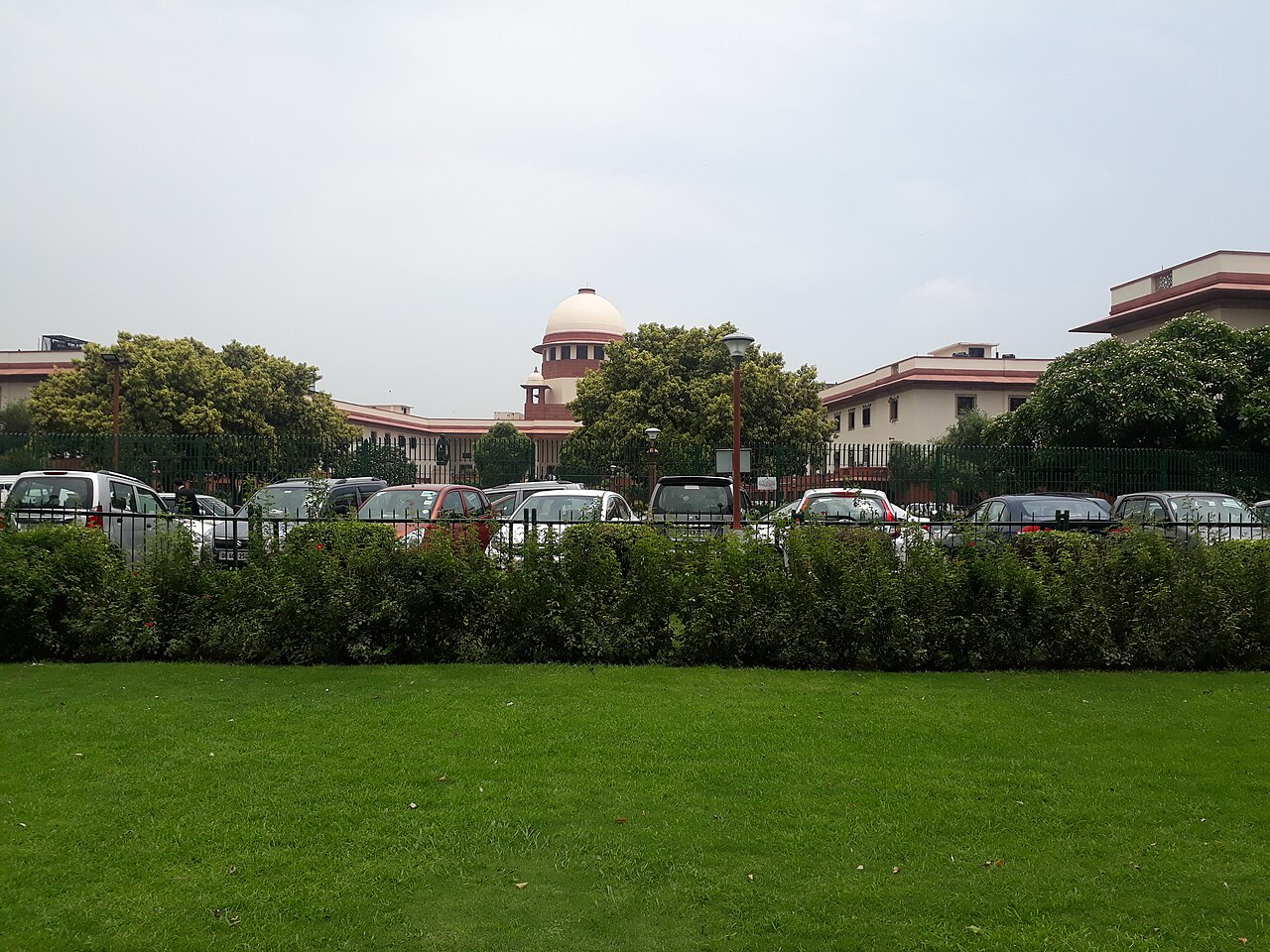
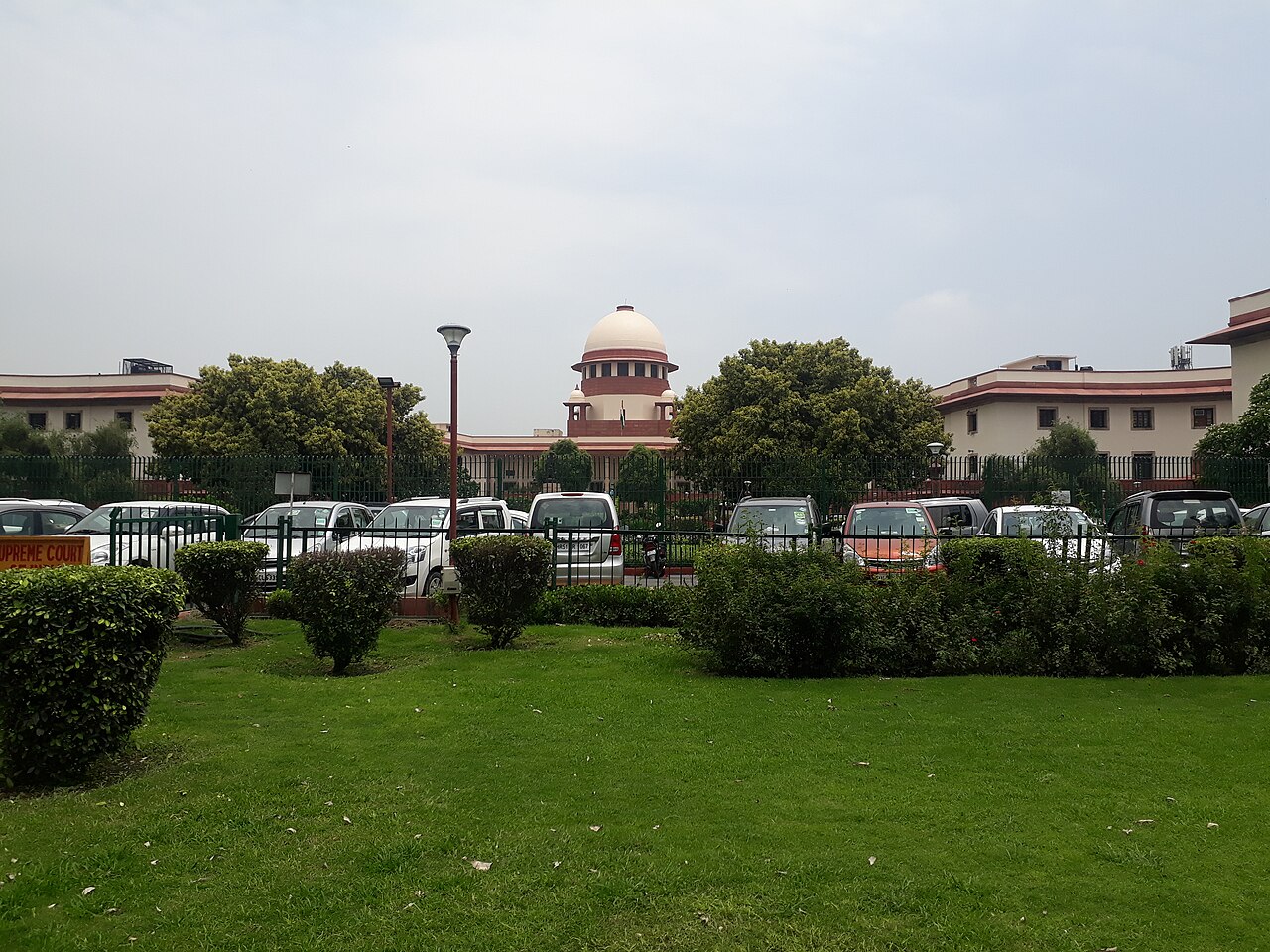
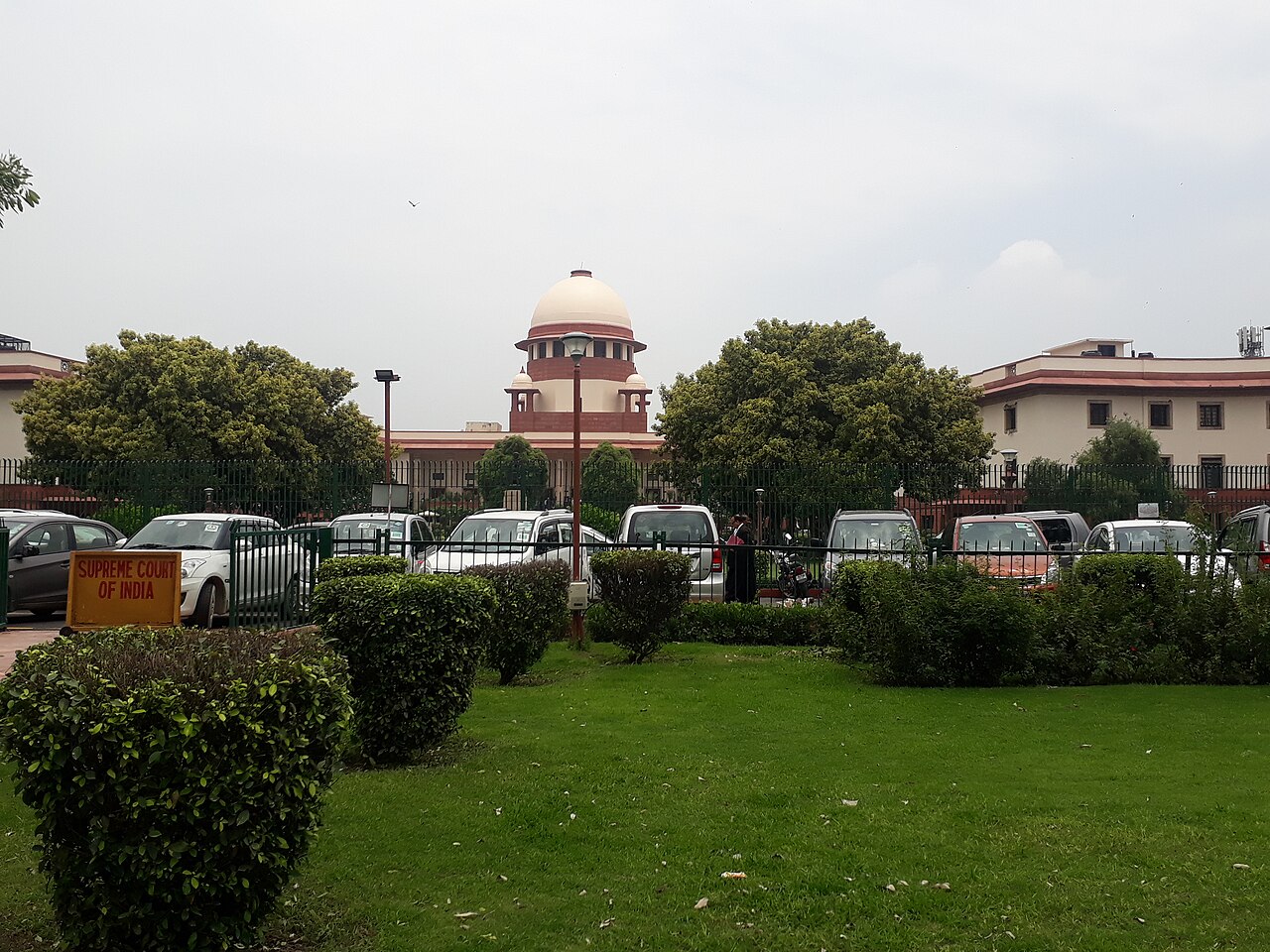
The court building is shaped to symbolise the scales of justice with a central wing flanked by a wing on either side. The foundation stone was laid on 29 October 1954 by Rajendra Prasad, the first President of India. The main block was built on a triangular plot of land measuring 17 acres (6.9 ha), designed in the Indo-British architectural style by Ganesh Bhikaji Deolalikar. In 1979, two wings were added to the complex, and they were further extended in 1994. On 20 February 1978, a bronze sculpture of 'Mother and Child' was installed in the lawn, designed by Chintamoni Kar. When installed, there were protests by a section of advocates who claimed the mother's resemblance to Indira Gandhi; after it was clarified that the model was made in 1969, the advocates withdrew their protests.
Reader's Guide
The Supreme Court of India holds a central role in the Indian legal system as the apex constitutional court. It takes up appeals primarily against verdicts of the High Courts of various states and tribunals, and as an advisory court, it hears matters referred by the president of India. The court has the power of judicial review, invalidating both ordinary laws and constitutional amendments as per the basic structure doctrine developed in the 1960s and 1970s. As mandated by the constitution, it safeguards the fundamental rights of citizens and settles legal disputes between the central government and state governments. Its decisions are binding on other Indian courts as well as the union and state governments. Under Article 142, the court has inherent jurisdiction to pass any order deemed necessary in the interest of complete justice, which becomes binding on the president to enforce. The court also holds the ability to invalidate parliamentary and governmental decisions if they violate fundamental features, and can overturn the impeachment process of the president and judges. Under Articles 129 and 142, it can punish anyone for contempt of any court in India, including itself. In May 2006, it directed a sitting minister in the Government of Maharashtra to serve a one-month prison term for contempt of court.
Did You Know?
- The Supreme Court of India was established on 28 January 1950, two days after India became a republic.
- The first chief justice of India was H. J. Kania.
- The court building, shaped to symbolise the scales of justice, was designed by Ganesh Bhikaji Deolalikar, the first Indian to head the Central Public Works Department.
- In October 2024, a new statue of Nyay Devi (Lady Justice) was unveiled in the court premises.
Roots in the Hague Conferences
The ICJ did not appear in a vacuum. Its intellectual and institutional DNA traces back to the Hague Peace Conference of 1899, convened at the initiative of Russian Tsar Nicholas II, which brought together the world's major powers and several smaller states. That gathering produced the Convention for the Pacific Settlement of International Disputes, establishing a framework for arbitral proceedings in The Hague and creating the Permanent Court of Arbitration, which began operating in 1902. A second Hague conference in 1907, attended by most sovereign states, refined those rules. At that session, the United States, Great Britain, and Germany jointly proposed a permanent court staffed by full-time judges, but delegates could not agree on a selection method, and the idea was tabled. Between 1911 and 1919, various proposals for an international judicial tribunal circulated without success. The First World War's devastation then made the creation of a standing international court seem urgent, and Article 14 of the League of Nations Covenant, adopted at the 1919 Paris Peace Conference, finally called for the Permanent Court of International Justice.
The Bench and Its Global Mandate
The ICJ's bench consists of fifteen judges, each serving a nine-year term after being elected by both the UN General Assembly and the Security Council. The court's composition carries a deliberate representational requirement: it must reflect the main forms of civilization and the principal legal systems of the world, and no two sitting judges may share the same nationality. This design ensures that no single legal tradition dominates the court's deliberations. The ICJ is physically seated in the Peace Palace in The Hague, Netherlands, a location it shares with the Permanent Court of Arbitration. This makes it unique among the six principal organs of the United Nations, as it is the only one not based in New York City. The court conducts its business in two official working languages, English and French, a bilingual arrangement that echoes the multilingual character of the international community it serves. All UN member states are automatically parties to the ICJ Statute, which is embedded within the UN Charter itself.
Jurisdiction, Authority, and the Enforcement Gap
The ICJ's power rests on a critical principle: in contentious cases between states, its jurisdiction is entirely consent-based. States may accept the court's authority through special bilateral agreements or by filing declarations that submit them to compulsory jurisdiction. The court also issues advisory opinions on legal questions referred to it by other UN organs and specialized agencies, though these carry a different legal character. Since its first case was submitted in 1947, the ICJ has entertained 201 cases as of September 2025. Its judgments in contentious matters are final and binding on the parties involved, and its rulings and opinions serve as primary sources of international law. Yet the court possesses no formal enforcement mechanism of its own. Compliance is ultimately a political question, falling to the UN Security Council, where the five permanent members hold veto power. This structural limitation means that a judgment's real force depends heavily on the political will of the great powers.
The PCIJ's Lasting Innovations
The Permanent Court of International Justice, which operated from 1922 until 1940, introduced a cluster of innovations that the ICJ inherited and built upon. Unlike earlier ad hoc arbitral tribunals, the PCIJ was a permanent institution governed by its own statute and rules of procedure, supported by a standing registry that served as a liaison between the court and governments. Its proceedings were largely public, with pleadings, oral arguments, and documentary evidence open to scrutiny. The PCIJ was accessible to all states and could be declared to have compulsory jurisdiction over disputes. Perhaps most significantly, its Statute was the first to enumerate the sources of law the court would draw upon, and that enumeration in turn became a foundational list of sources of international law itself. The PCIJ's bench was more representative of the world's diverse legal traditions than any prior international judicial body. Although the PCIJ was not formally part of the League of Nations, and League membership did not automatically bind states to its statute, its institutional model proved so influential that the ICJ's founding statute draws heavily from it.
Gallery
Frequently Asked Questions
What is the Supreme Court of India?
It is India's apex judicial body, functioning as the final court of appeal for all civil and criminal disputes in the country. It also serves as the ultimate interpreter and guardian of the Indian Constitution.
When was the Supreme Court of India established and what did it replace?
It began operating on 26 January 1950, coinciding with India's declaration as a republic. It succeeded the Judicial Committee of the Privy Council as the nation's highest appellate authority.
How many judges serve on the Supreme Court of India?
The court's sanctioned strength is 34 judges in total, consisting of the Chief Justice of India plus up to 33 additional judges. The Chief Justice presides over all sittings and allocates cases to benches.
What original jurisdiction does the Supreme Court of India hold?
It has the authority to adjudicate disputes between the central government and one or more states, as well as disputes among states themselves. It may also initiate suo motu proceedings to safeguard fundamental rights and uphold constitutional principles without waiting for a petition.
Why does the Supreme Court of India matter in the wider law-and-diplomacy landscape?
Its final rulings on domestic law directly shape how India interprets and implements international treaties, trade agreements, and diplomatic commitments. As the constitutional guardian, it sets the legal framework within which the country conducts its foreign relations and fulfils its global obligations.
More in International Law & Diplomacy 1-24
Spotted an error? Know more?
This is a living reference — every entry is fact-audited, and reader corrections feed straight into our audit queue. Suggest an edit · See this site's audit record