
South Asian Association for Regional Cooperation
Intergovernmental organization for South Asian regional cooperation.

Kyat02 · CC BY-SA 3.0
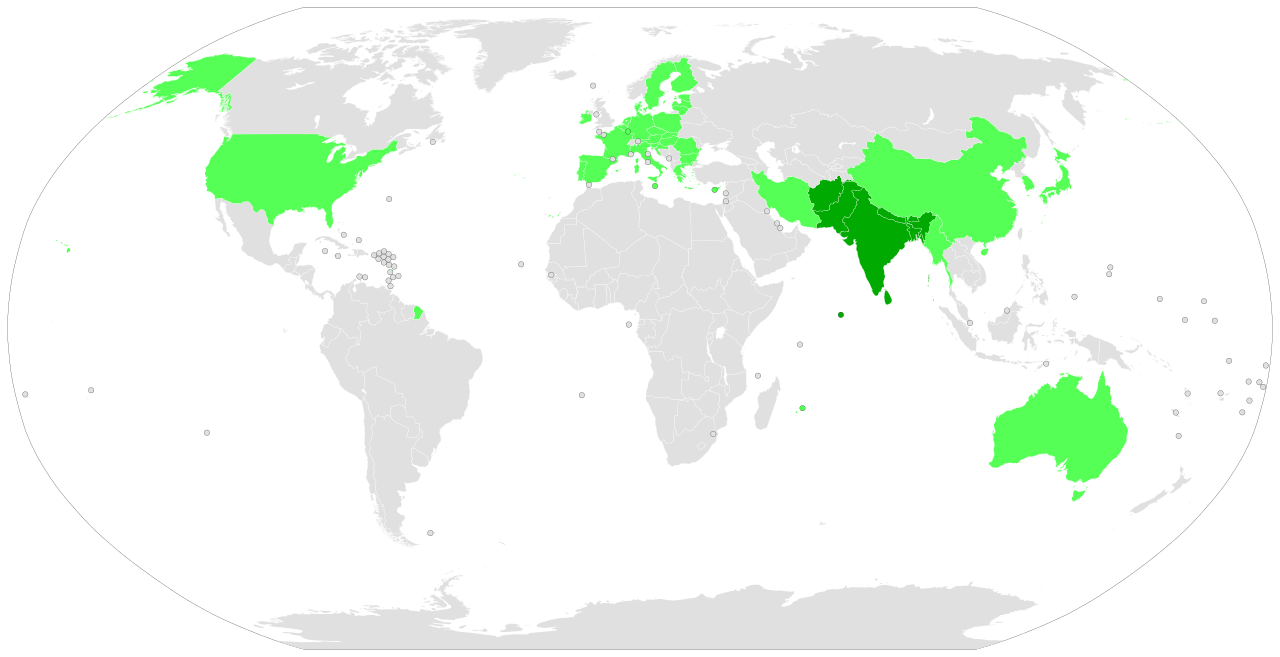
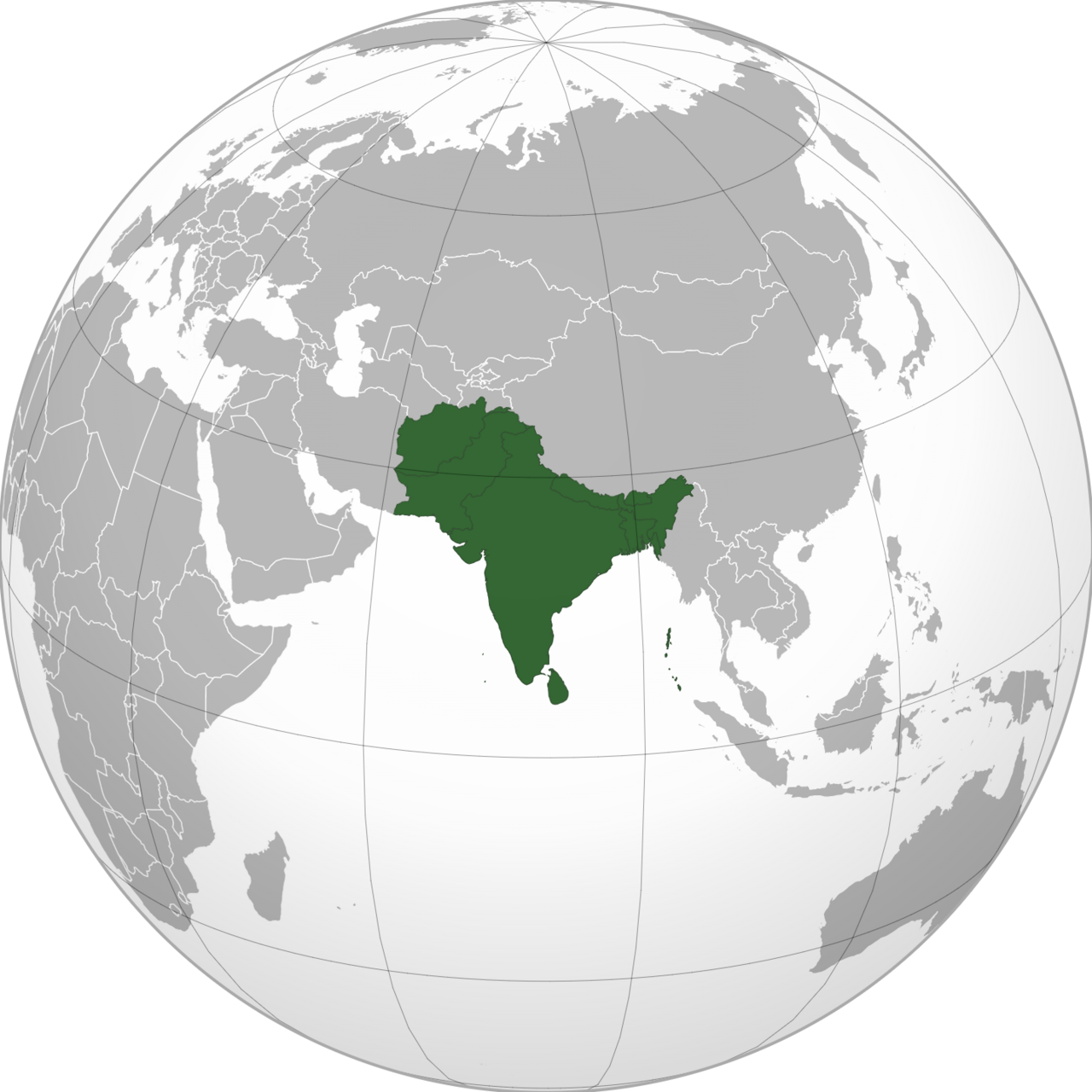
The South Asian Association for Regional Cooperation (SAARC) is an intergovernmental organization founded in Dhaka, Bangladesh, on 8 December 1985. It comprises eight sovereign member states: Afghanistan, Bangladesh, Bhutan, India, Maldives, Nepal, Pakistan, and Sri Lanka. SAARC was established to promote economic development and regional integration, including through the South Asian Free Trade Area since 2006. The organization is headquartered in Kathmandu, Nepal, and maintains observer status at the United Nations and links with the European Union.
- Founded
- 8 December 1985
- Headquarters
- Kathmandu, Nepal
- Members
- 8 sovereign states (Afghanistan, Bangladesh, Bhutan, India, Maldives, Nepal, Pakistan, Sri Lanka)
- Observers
- 9 (Australia, China, European Union, Iran, Japan, Mauritius, Myanmar, South Korea, United States)
- Population share
- About 21% of world population (as of 2021)
- Economic share
- 5.21% of global economy (US$4.47 trillion, as of 2021)
Lore & Background
The idea of South Asian cooperation was discussed at conferences in 1947, 1950, and 1954. In the late 1970s, Bangladesh's President Ziaur Rahman proposed a regional framework after failing to join ASEAN. He wrote to South Asian leaders, and during a 1977 visit to India, discussed cooperation with Prime Minister Morarji Desai. King Birendra of Nepal also called for regional cooperation in river waters in 1977. The Soviet intervention in Afghanistan in 1979 accelerated efforts amid security concerns. Foreign ministry officials from seven countries first met in Colombo in April 1981. Bangladesh's proposal was endorsed by Nepal, Sri Lanka, Bhutan, and Maldives, but India and Pakistan were initially skeptical—India feared smaller neighbors would re-internationalize bilateral issues, while Pakistan saw it as a potential Indian strategy for economic dominance. After diplomatic consultations at the UN from 1979 to 1980, Bangladesh prepared a working paper. In September 1981, a Committee of the Whole in Colombo identified five areas for cooperation. In 1983, foreign ministers adopted the SAARC Declaration and launched the Integrated Programme of Action in agriculture, rural development, telecommunications, meteorology, and health. The first summit was held in Dhaka on 7–8 December 1985, hosted by President Hussain Ershad, with leaders from Bhutan, Pakistan, India, Nepal, Sri Lanka, and Maldives signing the declaration.
Reader's Guide
SAARC represents a significant attempt at regional integration in South Asia, an area comprising about 21% of the world's population. Its founding aimed to replicate the success of ASEAN and foster economic development through cooperation. The organization established the South Asian Free Trade Area in 2006. However, SAARC has faced substantial challenges. As of 2026, no summits have been held since the 18th summit in Nepal in November 2014. The 19th summit, scheduled for Pakistan in November 2016, was indefinitely postponed after India and several other members withdrew following the Uri attack by the Pakistani militant group Jaish-e-Mohammed. India now cooperates with eastern neighbors through BIMSTEC, while Bangladesh has sought to revive SAARC and pursue ASEAN membership. The inclusion of Afghanistan in 2007 generated debate over South Asian identity, and Afghanistan's Taliban takeover in 2021 created further complications, including a dispute over the selection of a Secretary General. The organization's observer status with the UN and links with the EU highlight its diplomatic reach, but internal tensions and geopolitical rivalries have limited its effectiveness.
Did You Know?
- SAARC was founded in Dhaka, Bangladesh, on 8 December 1985.
- As of 2021, SAARC members account for about 21% of the world's population and 5.21% of the global economy.
- The 19th SAARC summit in Pakistan was indefinitely postponed after multiple countries boycotted the summit.
- Afghanistan joined SAARC as its eighth member in April 2007, despite debates over its South Asian identity.
From Border Talks to a Continental Bloc
The SCO traces its roots to a 1996 treaty signed in Shanghai, where the heads of state of China, Kazakhstan, Kyrgyzstan, Russia, and Tajikistan agreed to deepen military trust along their shared borders. That initial "Shanghai Five" framework was quickly followed by a 1997 Moscow treaty on reducing military forces in border regions, and a landmark 1997 declaration by Yeltsin and Jiang Zemin envisioning a "multipolar world." Annual summits then rotated through Almaty, Bishkek, and Dushanbe through 2000, where members collectively pledged to reject foreign intervention dressed as humanitarianism or human rights protection, and to support one another in safeguarding national independence and territorial integrity. The structure proved effective at resolving lingering border disputes and coordinating military deployments. In 2001, the format was formally institutionalised back in Shanghai, with Uzbekistan admitted as a sixth member, and the Declaration of Shanghai Cooperation Organisation signed on 15 June 2001, marking the birth of the SCO as a distinct entity.
A Quarter of the Planet
By any measure, the SCO dwarfs most regional groupings. It spans at least 24 percent of the Earth's total surface area and 65 percent of the Eurasian landmass, while its member populations collectively represent roughly 42 percent of all humans alive. Economically, the bloc's combined nominal GDP reaches approximately 23 percent of the global total, and when measured by purchasing power parity, that figure climbs to around 36 percent. As of 2024, ten nations hold full membership, making it the world's largest regional organisation in both geographic reach and demographic weight. The SCO's mandate stretches across political coordination, economic integration, security cooperation, and counter-terrorism, positioning it as a multi-dimensional forum rather than a single-issue alliance. Its sheer scale means that decisions made at its summits ripple through a vast swath of the planet's trade routes, energy corridors, and security architectures.
The Long Road to Ten
The SCO's membership has grown steadily since its 2001 founding. Uzbekistan was the first addition, admitted at the very Shanghai summit that institutionalised the group. The next major leap came in 2017, when India and Pakistan—both of which had attended as guests as early as the 2005 Astana summit—were formally inducted as full members after signing memoranda of obligations in Tashkent in 2016. That expansion brought the bloc to eight states and, as Kazakh president Nazarbayev had quipped in 2005, seated "representatives of half of humanity" at the table. Iran followed in July 2023, and Belarus joined in July 2024, rounding out the current ten-member roster. Beyond full membership, several other nations participate as observers or dialogue partners, and the SCO has cultivated formal relations with bodies ranging from the United Nations General Assembly to ASEAN, the CIS, and the African Union's anti-terrorism centre.
How the Machine Runs
At the apex of SCO governance sits the Council of Heads of State, the supreme decision-making body that convenes once a year in a rotating member capital. Because India and Pakistan operate under parliamentary systems, their prime ministers attend this council in place of presidents, mirroring the role their counterparts play in other member states. Beneath the HSC, the Council of Heads of Government handles multilateral cooperation discussions and approves the organisation's annual budget. The institutional scaffolding was laid between 2001 and 2003: the SCO Charter, signed in Saint Petersburg in 2002 and entering into force in September 2003, codified the organisation's purposes, principles, and operational structures. By 2003, a permanent Secretariat was established in Beijing alongside the Council of Foreign Ministers. A dedicated Regional Anti-Terrorist Structure handles security coordination, and by 2007 the SCO was running over twenty large-scale projects in transportation, energy, and telecommunications, with regular meetings of officials across security, defence, economic, cultural, and banking portfolios.
Gallery
Frequently Asked Questions
What is the South Asian Association for Regional Cooperation?
SAARC is an intergovernmental body that brings together eight South Asian nations to foster economic growth and closer regional ties. It was formally established in Dhaka, Bangladesh, on 8 December 1985, and its secretariat operates out of Kathmandu, Nepal.
What are SAARC's powers and role?
The organization does not possess binding legislative authority over its members; instead, it serves as a forum for coordinating trade policy, promoting the South Asian Free Trade Area (active since 2006), and facilitating dialogue on shared development challenges. Its decisions are consensus-based and rely on individual member states to implement them domestically.
How does SAARC's story end?
SAARC is a living institution with no predetermined conclusion, so it has no narrative ending in the traditional sense. As of the latest available data, it continues to function with eight full members and nine observer nations, maintaining its UN observer status and its partnership link with the European Union.
Why is SAARC important?
Collectively, its member states represent roughly 21 percent of the global population and about 5.21 percent of world GDP (approximately US$4.47 trillion as of 2021), making it a significant bloc for regional economic coordination. It also provides a structured diplomatic channel for countries that might otherwise lack a dedicated multilateral platform focused specifically on South Asian issues.
Who are SAARC's member states and observers?
The eight full members are Afghanistan, Bangladesh, Bhutan, India, Maldives, Nepal, Pakistan, and Sri Lanka. Nine entities hold observer status, including the United States, China, Japan, South Korea, Australia, Iran, Mauritius, Myanmar, and the European Union.
More in International Law & Diplomacy 1-24
Spotted an error? Know more?
This is a living reference — every entry is fact-audited, and reader corrections feed straight into our audit queue. Suggest an edit · See this site's audit record